Funding for a New Venue Owner Building From the Ground Up


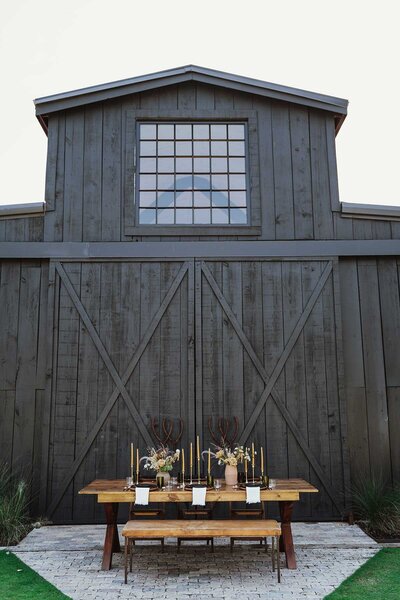
Funding for new venue owners who want to build from the ground up is a big topic—especially in the current economy.
Things are changing. The economy is shifting. And when the economy dips or struggles, funding reflects that.
If you’re seeking funding right now, expect more questions, more proof, and deeper scrutiny.
This is not fear-mongering—building the dream is still possible! The goal of this blog post is simple: to pull back the curtain so the process doesn’t feel overwhelming or shocking when lenders start digging in.
Here’s what to expect when you’re going for funding.
The Four Things Every Lender Still Wants
No matter the route—traditional lending, SBA, investors—there are four primary documents lenders will require:
- Business plan
- Market analysis
- Pro forma
- Nest egg (down payment)
That hasn’t changed.
What has changed is how deeply lenders are analyzing them.
It may feel like being quizzed on your own information. They are asking more detailed questions and expecting a stronger justification behind every number.
Preparation matters more than ever. Know how you arrived at the numbers you present. Know the data that’s in your Business Plan. And know the pros and cons of the market. Being prepared will allow you to walk into the funding meeting with confidence.
SBA Loans: What’s Different Now
Historically, SBA loans were the go-to recommendation.
A 504 loan.
A 7(a) loan.
Fifteen percent down.
Now, there’s noticeably more pushback from SBA lenders. The documentation and interview process are heavier than they used to be.
Most importantly, down payment expectations have shifted.
What used to be 15% down is now:
- Minimum 20% down
- Some lenders requiring 25% down
That difference is significant.
On a $500,000 loan, the jump from 15% to 25% is meaningful.
On a $5 million loan, that difference is massive.
Many venue owners spend years saving for 15%—only to find the rules changed. An additional 10% after three years of saving is a difficult pill to swallow.
SBA may still be an option for you. But instead of recommending it automatically, I encourage you to do more research and use discernment.
That being said, creative lenders outside the SBA space are worth exploring.
DSCR Loans: A Strong Option for Acquisitions
If you’re hoping to acquire an existing property—whether it’s already a venue or a property with strong venue potential—a DSCR loan may be a good option for you.
DSCR stands for Debt Service Coverage Ratio. It measures a borrower’s ability to cover loan obligations by comparing net operating income to annual debt payments.
In simple terms:
Can the property generate enough income to cover the mortgage—including principal and interest?
This proof shows up in:
- Market analysis (especially competitive analysis)
- Pro forma (CapEx vs. OpEx)
CapEx—capital expenditures—are one-time investment costs.
OpEx—operating expenditures—are recurring monthly expenses.
The numbers must demonstrate that wedding and event revenue can cover both.
DSCR loans are common in real estate investing. They are frequently used for short-term rentals, and they can translate well to event venue acquisitions when structured properly.
So, What About the Down Payment?
This varies.
Some lenders may require a traditional down payment. Others may structure loans differently depending on:
- The property
- The market
- The income potential
In certain scenarios, down payments can be extremely low—even zero—but low down payments come with trade-offs.
Mortgage payments start immediately, meaning revenue generation must ramp up quickly. Renovations, software systems, workflows, marketing—everything must move fast.
Be careful, though. Low down payment sounds attractive until you review the monthly payment.
Remember: the numbers must work. It’s probably not a smart move if they don’t.
If numbers aren’t a strength, involve professionals:
- CPA
- Tax accountant
- Financial advisor
The structure must be sustainable—not just accessible.
If You’re Building New Construction
For ground-up builds, creativity is critical. Avoid limiting your options to traditional conventional loans with rigid 20% down structures.
Instead, look for a lender willing to evaluate:
- Available equity
- Other assets
- Cross-collateralization opportunities
- Alternative loan structures
The goal isn’t simply a lower down payment.
The goal is a smart structure.
Questions to ask:
- What does the payment structure look like long-term?
- What happens if interest rates are high at closing?
- When can refinancing happen?
- What penalties or restrictions exist?
- What are the built-in handicaps?
Mortgage rates fluctuate, and your strategy must account for that.
Creative lenders who are direct and transparent are invaluable. Clear yes-or-no answers save time and energy. The right lender will explain the numbers thoroughly and welcome detailed questions.
Preparing for the Funding Process
Every lender will require:
- Business plan
- Market analysis
- Pro forma
- Nest egg
Your preparation determines your confidence in the room.
For those entering funding:
- One-on-one Funding Prep support is available.
- Funding 101™ is a DIY course that walks through every step.
Funding 101™ includes:
- Step-by-step instruction
- A plug-and-play business plan template specifically written for venues
- Clear guidance on market analysis
- Pro forma breakdowns
Clarity and preparation shift the experience from overwhelming to strategic.
For Those Acquiring an Existing Property
Grab my Venue Acquisitions Guide if you’re looking to purchase an existing property—whether it’s currently a wedding or events venue or not.
The strategy differs from new construction—but the opportunity can be strong when structured well.
Funding in this economy requires deeper preparation, stronger documentation, and smarter strategy.
The opportunity still exists. The key is entering the process informed, equipped, and ready to answer every question confidently.
Want to read this later? Save it to Pinterest!
Affiliate Disclosure
& Content Disclaimer
This post may contain affiliate links from a paid sponsor, Amazon or other program. When you use these links to make a purchase I earn a small commission at no extra cost to you. This allows me to continue creating the content that you love. The content in this article is created for information only and based on my research and/or opinion.
Affiliate Disclosure
& Content Disclaimer
This post may contain affiliate links from a paid sponsor, Amazon or other program. When you use these links to make a purchase I earn a small commission at no extra cost to you. This allows me to continue creating the content that you love. The content in this article is created for information only and based on my research and/or opinion.